
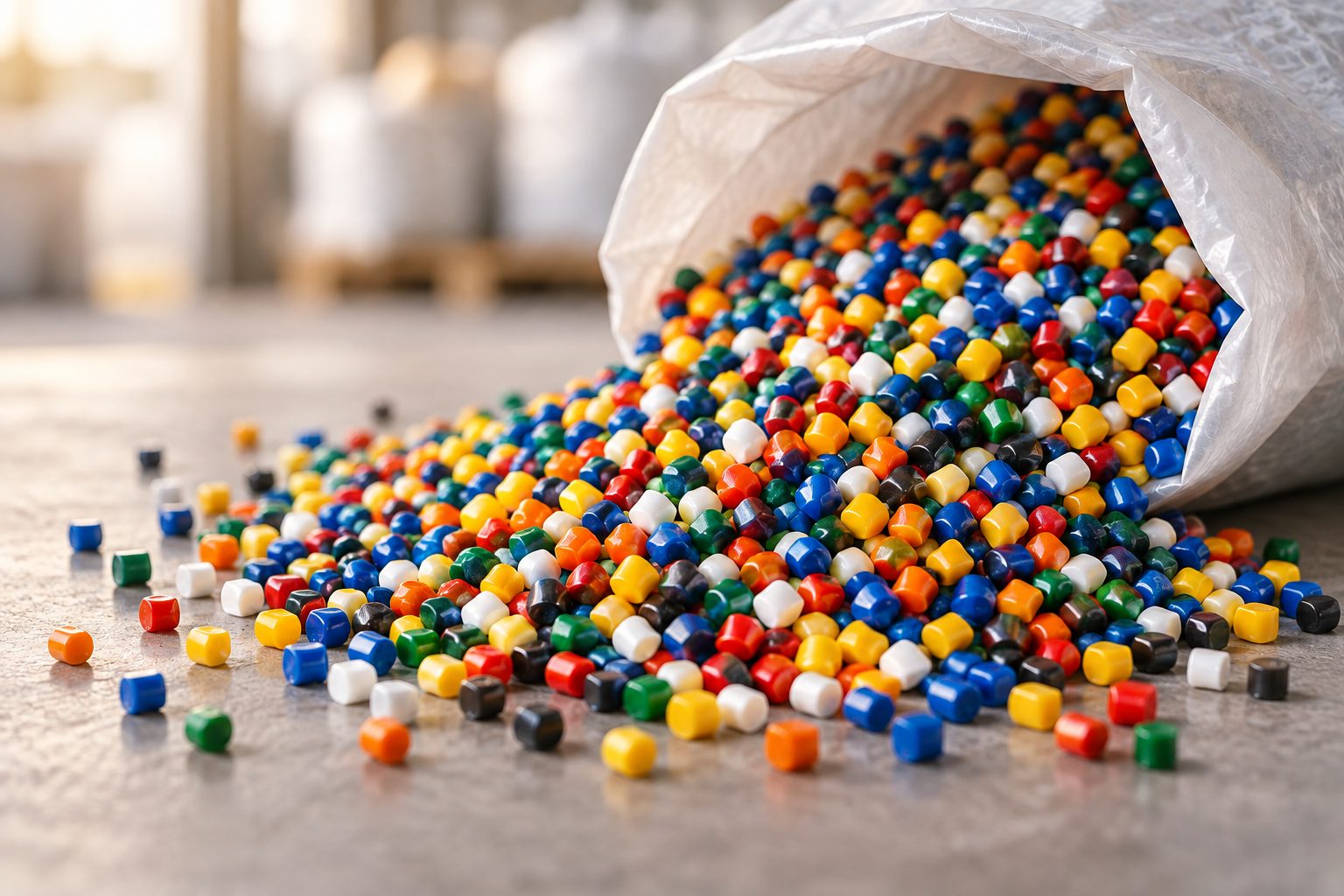
PVC on its own is a difficult material. It is brittle, it degrades when heated and it does not melt easily. Almost every useful PVC product, from a window profile to a transparent bottle, depends on a small dose of additives. This note looks at the additives market, the size of Türkiye's plastics industry and what each additive family actually does.
The Global Picture
Grand View Research estimates the global PVC additives market at US$6.8 billion in 2024, growing by about 6 percent a year to reach US$9.6 billion by 2030. Heat stabilizers are the largest segment, with more than a third of the market, followed by impact modifiers, processing aids, plasticisers and lubricants.
Türkiye: Europe’s Second Largest Plastics Producer
According to PAGEV, the Turkish Plastics Industry Foundation, Türkiye produced 9.9 million tonnes of plastic products in 2024, worth US$40.9 billion and 8 percent more than the year before. That makes Türkiye the second largest plastics producer in Europe and the sixth largest in the world. Direct exports reached 2.7 million tonnes and US$7.5 billion; including exports inside other products, the sector estimates about US$15 billion.
Much of the raw material is imported. Türkiye's PVC imports reached a record of about 936,000 tonnes in 2023, according to ChemOrbis, which means additive supply and polymer supply both rely on reliable international sourcing.
What Each Additive Does
- Heat stabilizers stop PVC from breaking down at processing temperatures. Without them the polymer yellows and releases hydrochloric acid.
- Impact modifiers make rigid PVC tough. Core shell modifiers have a rubbery core that absorbs energy and a hard shell that disperses in the PVC. MBS types such as Kaneka Kane Ace™ B-580 keep bottles and films transparent and tough in the cold; CPE and acrylic types are preferred for profiles and pipes that stay outdoors.
- Processing aids such as acrylic Kane Ace™ PA grades help PVC fuse faster and more evenly, improve melt strength and give a smoother surface.
- Epoxidized soybean oil acts as a secondary plasticiser and co stabilizer, especially in flexible PVC and food contact films.
- PE wax and lubricants control friction in the extruder so the melt flows without sticking or burning.
In masterbatch, pigments and fillers matter as much: titanium dioxide for white, carbon black for black and UV protection, iron oxides and phthalocyanines for colour.
What This Means for Buyers
A profile or pipe line runs continuously, so a change in additive quality shows up as scrap within hours. Buyers need the same grade every time, technical support when a formulation changes and stock close to the factory. Gültaş Kimya supplies Kaneka processing aids and MBS impact modifiers, chlorinated polyethylene, heat stabilizers, antioxidants, epoxidized soybean oil and PE wax from İstanbul.