
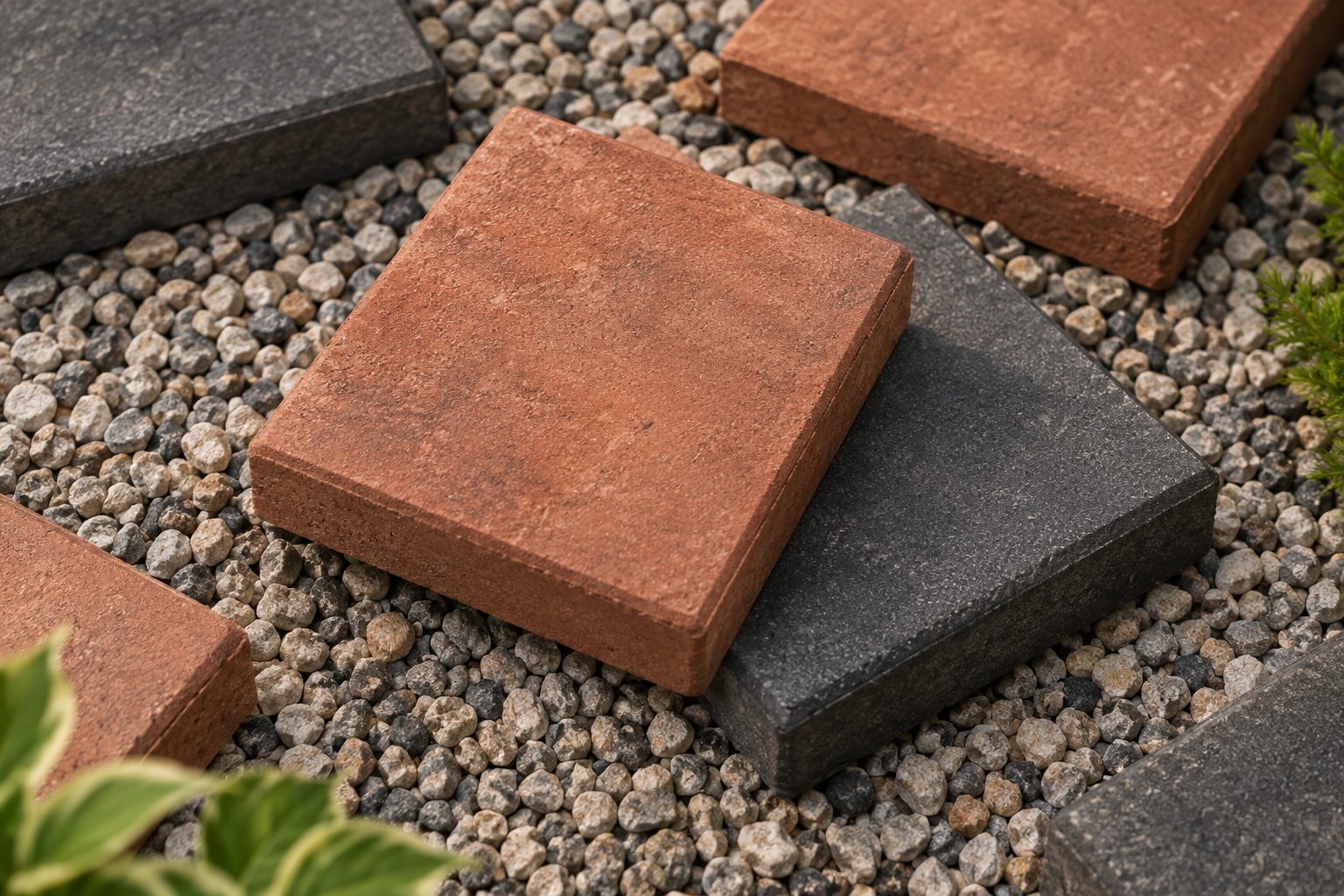
Look at a new pavement, a tiled roof or a facade panel and you are looking at iron oxide. Coloured concrete is one of the quietest success stories in building materials: a few kilograms of pigment turn a grey, functional product into something that sells on appearance. This note looks at the pigment market behind it, Türkiye's position as one of the world's largest cement and concrete producers, and what buyers should check before they order.
The Global Picture
Mordor Intelligence puts the global iron oxide pigments market at about US$2.66 billion in 2026, growing by around 4.5 percent a year to reach roughly US$3.31 billion by 2031. Building and construction is the largest single use, with about half of all revenue in 2025, anchored by coloured concrete, paving stones and roofing.
The reason is simple chemistry. Iron oxides are stable in the alkaline environment of cement, they do not fade in sunlight and they are inexpensive per unit of colour. Reds, yellows, blacks and browns cover almost every earth tone an architect asks for, while chrome oxide green adds a durable green and titanium dioxide lightens shades or gives white concrete.
Türkiye: A Cement and Concrete Heavyweight
Türkiye is one of the few countries where the concrete market is as big as the numbers suggest. According to the Turkish Cement Manufacturers' Association (TÜRKÇİMENTO), Türkiye is the fifth largest cement producer in the world, the leading producer in Europe and one of the world's top two cement exporters. In the first nine months of 2025 the industry produced 68 million tonnes, 7.5 percent more than a year earlier, and exports rose by 16 percent in the first ten months.
Ready mixed concrete tells the same story. The Turkish Ready Mixed Concrete Association (THBB) estimates that production reached a record of about 130 million cubic metres in 2024. In 2023 Türkiye produced 119 million cubic metres, half as much as all EU member states combined, which makes it the largest ready mixed concrete producer in Europe.
How Much Pigment Goes Into Concrete
Pigment is dosed by weight of cement, not by weight of concrete. A dosage of 2 to 5 percent is standard; up to about 8 percent gives intense shades, and beyond that point the colour stops getting stronger, so extra pigment only adds cost. In ready mixed concrete this often works out at around 10 kilograms per cubic metre. The European standard EN 12878 sets the requirements for pigments used in cement based materials.
- Paving stones and kerbs the largest single outlet, where colour must stay identical from one production day to the next.
- Roof tiles where weather and UV resistance decide whether a colour still looks right after ten summers.
- Facade panels and architectural concrete where designers ask for exact, repeatable shades.
- Ready mixed and precast concrete where powder, granulated or liquid pigment has to disperse quickly in the mixer.
What Buyers Should Check
For a concrete producer, colour is only as good as its consistency. Four things matter: tinting strength and shade from lot to lot, compliance with EN 12878, the physical form (powder, micronized or granulated for dust free dosing), and a supplier who can deliver the same grade again next season. A change of pigment source in the middle of a paving project shows up immediately on site.
Gültaş Kimya supplies LANXESS BAYFERROX® and COLORTHERM® iron oxides, BAYOXIDE® chrome oxide green, Synox iron oxides and titanium dioxide from stock in our Çayırova, Kocaeli warehouse. Most customers collect their goods from our warehouse the same or next working day, and we deliver to all 81 provinces.