
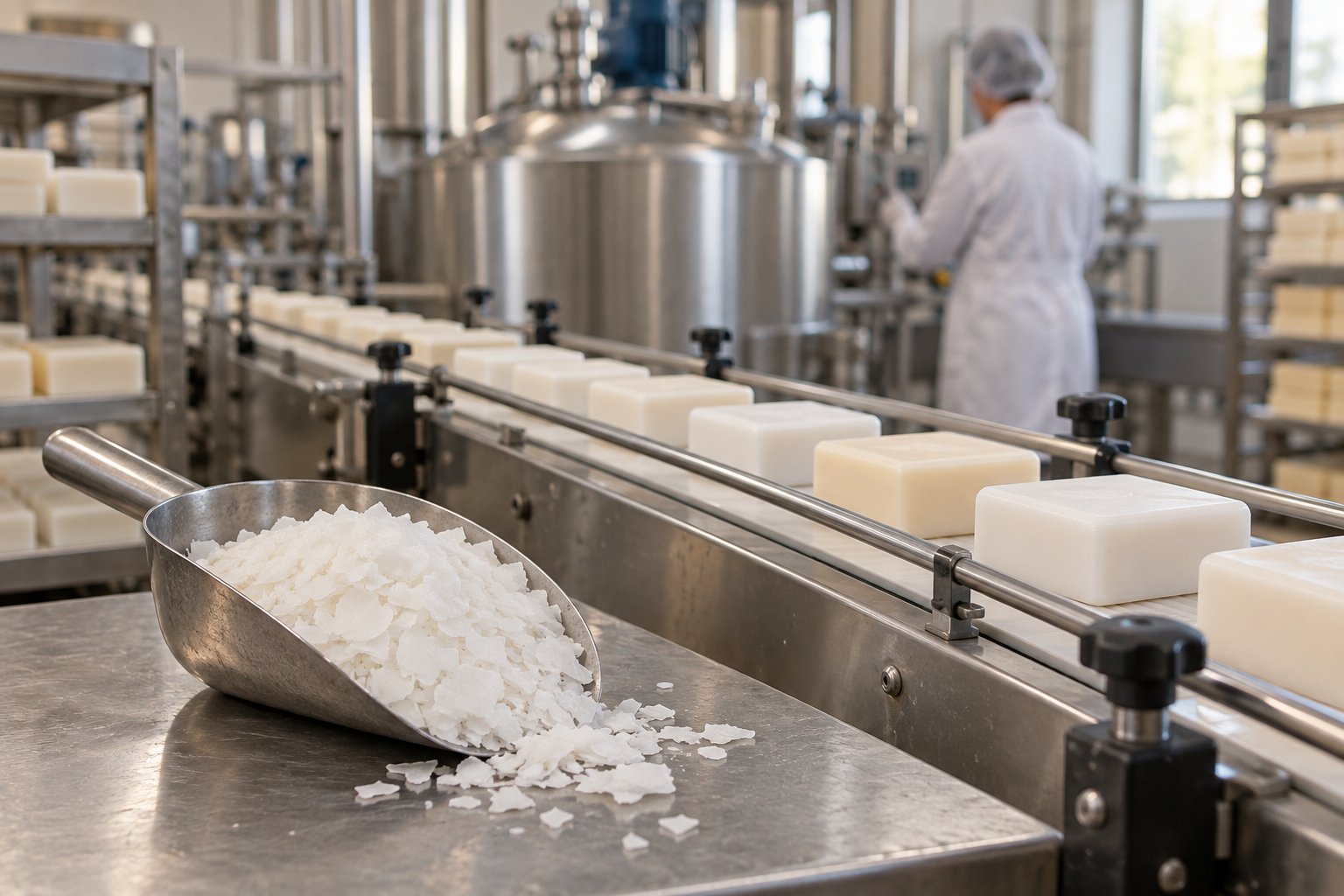
A good bar of soap is harder than it looks. It must be firm, last in the shower, lather well and feel creamy on the skin. Much of that comes down to one raw material: stearic acid. This note looks at the market, Türkiye's soap and personal care exports and what buyers should check on a stearic acid specification.
The Global Picture
Grand View Research estimates the global stearic acid market at about US$12.3 billion in 2024, growing by around 6 percent a year to US$17.3 billion by 2030. Soaps and detergents are the largest use, with about 28 percent of revenue, while personal care is the fastest growing. Other research houses give much higher totals, so the figures should be read as an order of magnitude.
Türkiye: Soap and Personal Care Exports
Türkiye's chemical industry exported goods worth US$31.9 billion in 2025, according to the İstanbul Chemicals and Chemical Products Exporters' Association (İKMİB). Essential oils, cosmetics and soap accounted for US$2.3 billion of that total. From traditional olive oil soaps to large scale toilet soap production, Turkish manufacturers sell across the Middle East, Africa and Europe.
What Stearic Acid Does in a Soap Bar
Soap is made from fatty acids. Long chain saturated acids, stearic and palmitic (C16 and C18), give a hard bar that keeps its shape and dissolves slowly. On their own they do not foam much, but combined with lauric acid soaps from coconut or palm kernel oil, which lather quickly, they make the foam creamier and more stable. Getting that balance right is the soap maker's craft.
What Buyers Should Check
- Acid value and saponification value show how much fatty acid is really in the product, typically around 206 to 210 for triple pressed grades.
- Iodine value measures unsaturation; triple pressed grades are 0.5 or lower, which keeps the bar white and stable.
- Titer the solidification point, typically 55 to 56 °C, affects hardness and processing.
- C16 to C18 ratio and colour decide the feel of the bar and whether it stays white.
- Origin of the feedstock palm or tallow, which matters for certification and for the customer’s market.
What This Means for Buyers
For a soap maker, a change in stearic acid quality shows up as soft bars, cracking or discolouration. Gültaş Kimya supplies stearic acid to soap and personal care manufacturers across Türkiye, with pick up from our warehouse in Çayırova, Kocaeli or delivery to all 81 provinces. Ask our sales team for grades, specifications and a quote.